Hi, and thanks for visiting. I've been pondering my first official blog post for a while now. I've never been a heavy poster on social media, so this is a bit new for me. After a lot of deliberation, I figured I'd start with the idea that became the catalyst for DerNexus Solutions.
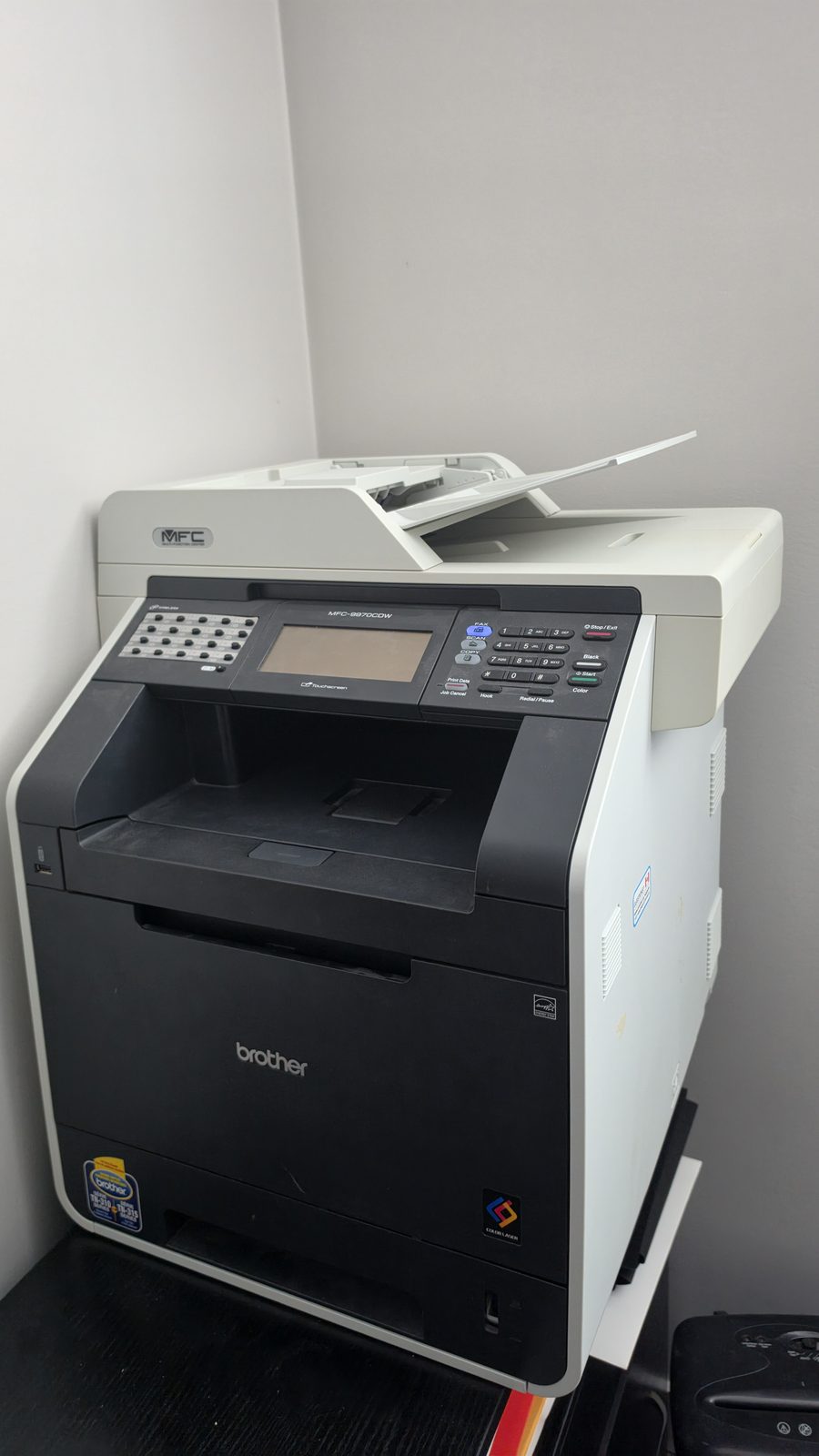
That's a picture of my second-hand Brother laser printer up top. It's big and it's awesome. It eats expensive toner cartridges and handles the day-to-day perfectly. And it was working fine. Perfect, even. Right up until the one time I had an urgent, time-sensitive need to print a really high quality color resume I'd tailored for a very specific enterprise role I was chasing. I even had an internal referral working in my favor, so I was putting in 100 percent effort.
And isn't that just the way it often goes?
The hardware you rely on runs perfectly right up until the moment you need it most. Then it randomly decides to conk out.
The old way: dig, post, and wait
In the old days, I'd have started the Google search for the model number and landed on the Brother troubleshooting pages. Then I'd get frustrated because none of the entries matched my exact issue. So I'd dig deeper, hit the tech forums, maybe share some pictures of the print problems, and wait for someone to respond. Maybe I'd get lucky and someone would see the post and reply within a few days. More often, the question just gets lost in the stream.
This time, I didn't have the luxury of time. So I did something I rarely do and asked for direction from the printer specialist where I buy my ink refills. But short of lugging that massive machine across the city, there was no real way for them to troubleshoot it. So I was back to square one, because I wasn't about to haul that beast anywhere.
The new way: show, don't tell
Then I remembered all the talk about Google's Gemini and its "multimodal" abilities. I wasn't even sure how to describe the problem beyond "my output is blurry and the colors are misaligned," so I took a picture of the blurry, misaligned page. I uploaded it to Gemini along with the printer model number, and asked it to troubleshoot why the print was failing and walk me through the fixes.
And it did. Within seconds I had a step-by-step guide. I'd try a step and report back with what happened. Within two rounds of back-and-forth, it had narrowed things down to two likely culprits. Then, poof, the test page came back perfect. Better calibrated than before, honestly.
That was the first of many lightbulb moments about how AI can be put to work as a genuinely different kind of tool, not just a glorified chatbot.
It snowballed from there. I'll tell you more in the next post. Stay tuned.